The Ultimate Guide to Cycling in Sweden
Eighteen hours of June daylight, signed routes from coast to canal and a cinnamon bun in every village: your complete guide to cycling in Sweden.
Quick links
Don't want to read all this?
We've planned 800+ cycling trips. Send your dates, fitness and group size — we'll map the route and book every night.


Sweden is made for a slow summer on a bike. The routes follow coasts, lakes and a 200-year-old canal, the towns sit a day's ride apart, and there is nearly always time for a swim before dinner. Every one of those towns has a café that takes its coffee break seriously.
This guide covers what to know before you go:
when to ride, and why June is special
the national cycle routes and how the signs work
the regions, how they differ and the tours we run in each
the places worth stopping for
a day on a self-guided tour, from breakfast to the evening swim
rules of the road, Swedish customs and travel logistics
Why cycle in Sweden?
Plenty of countries have cycle paths. What Sweden adds is space, light and a way of life that suits a bike.
The right of public access opens the countryside. Allemansrätten lets anyone cycle on private roads and through the countryside, pick wild berries, stop for a picnic and swim from almost any shore, as long as they keep clear of homes and leave nothing behind.
The long routes are signed end to end. Seven national cycle routes, each at least 200 km long, are marked from start to finish, so you can ride for a week without unfolding a map.
Summer light lasts until bedtime. A long lunch never costs you the evening, and around midsummer the south barely gets dark at all.
The hills are short and the water is close. Our routes follow coasts, a canal and lake shores, so the wind sets the effort, not the climbing. Sweden has close to 100,000 lakes larger than a hectare, says SMHI, the national weather and water agency, and on our routes a swim is never far away.
Road safety is national policy. In 1997 the Swedish parliament adopted Vision Zero, the goal that nobody should be killed or seriously injured on the roads, and it has guided Swedish road policy ever since.
When to go?
The best time for cycling in Sweden is mid-June to early July: the longest days, the most settled weather, and hotels that are not yet full because the Swedish school holidays have only just begun. The national routes are guaranteed open from 15 April to 15 October, but the season that matters runs from late May, when the beach cafés open, to mid-September.
Gothenburg in summer | Average high | Hours of sun |
June | 20°C | 242 |
July | 22°C | 246 |
August | 22°C | 205 |
The figures are the 1991 to 2020 averages from SMHI, Sweden's weather service.
June is the lightest month. Around midsummer Gothenburg gets about eighteen hours of daylight: sunrise before half past four, sunset after ten.
July is the warmest and the busiest: half the country is on holiday, so book a season ahead.
August has the warmest sea and the crayfish parties; the second half quietens as schools go back.
May and September are cool and calm, with the lowest prices and some cafés shut.
Rain falls in every month, usually as showers rather than wet days, and on the coast the wind matters more than rain. It blows mostly from the west and south-west, which is why the Kattegattleden is ridden from south to north.
The national cycle routes
Sweden's Transport Administration approves a route as national only if it is at least 200 km long, signed from end to end, open from 15 April to 15 October, and has beds, food and a station within reach. Seven routes have passed the test, all in the southern half of the country. Visit Sweden, the national tourist board, puts the best known of them on its list of the country's best cycling routes.
Route | Where it runs | Length |
1 Kattegattleden | Helsingborg to Gothenburg along the west coast | 390 km |
2 Sydostleden | Växjö to Simrishamn, from the Småland forests to the Baltic | 274 km |
3 Sydkustleden | Simrishamn to Helsingborg round the south coast | 260 km |
4 Unionsleden | Moss in Norway to Karlstad | 350 km |
5 Ätradalsleden | Falköping to Falkenberg, half of it on old railway lines | about 200 km |
6 Vänerleden | A loop round Lake Vänern | about 640 km |
7 Göta kanalleden | Sjötorp to Mem along the Göta Canal | 220 km |
How the signs work
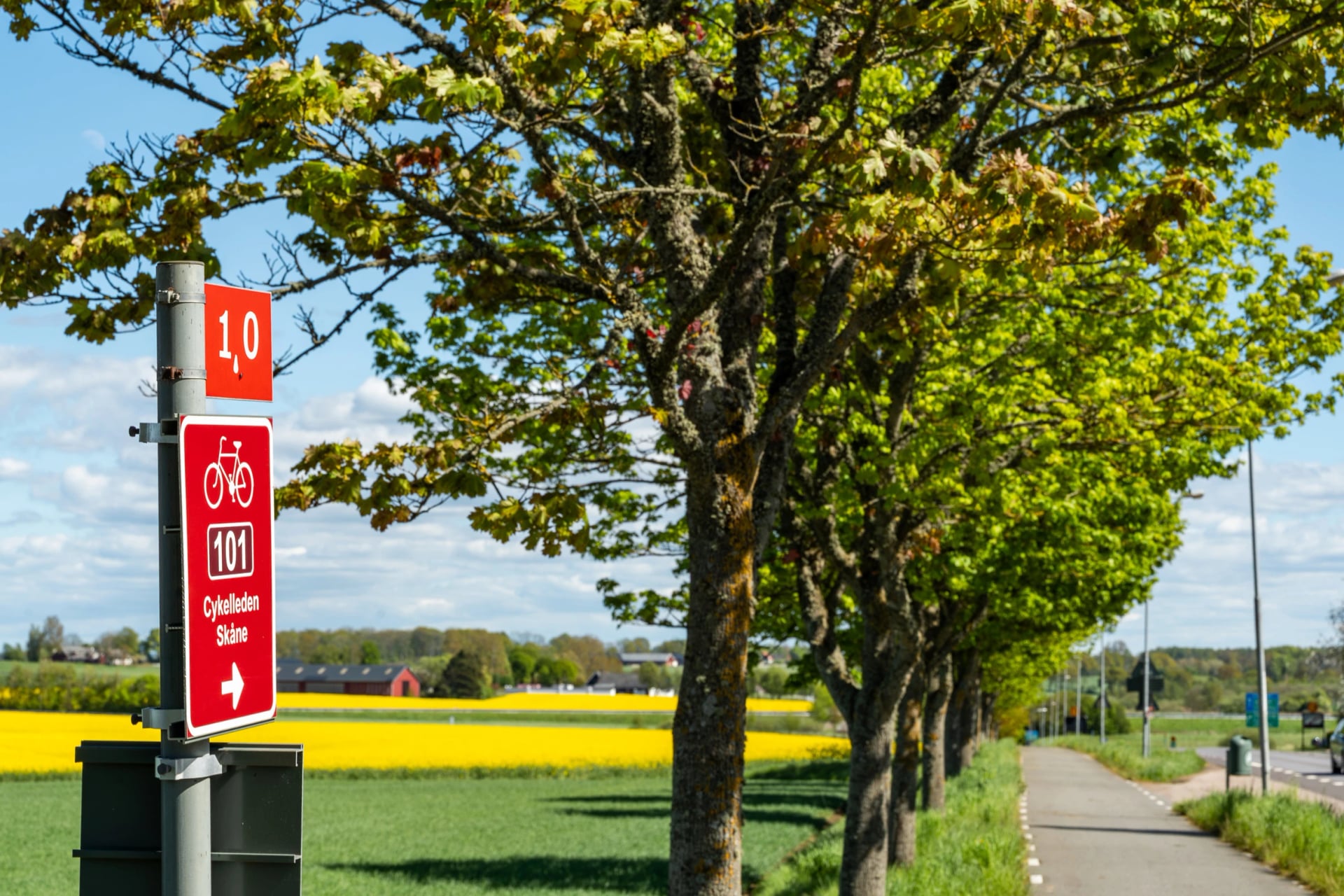
Each national route has a red sign with its white number, 1 to 7, repeated at junctions and placed so that you can ride the whole route without a map. Regional routes use the same red signs with three-digit numbers. In towns the signs often sit low on cycle-path posts, so look down as well as up. Two details confuse visitors: Swedish signs give kilometres to the next place, not to the end of the stage, and cycle paths run both ways unless marked otherwise.
On our tours the route is in a navigation app as well, because roadworks swallow a sign or two every summer.
Sweden's cycling regions
Southern Sweden fits very different landscapes into a few hours by train: a windy beach coast, a farmed south that looks like Denmark, a forest full of lakes, a canal dug by soldiers and an inland sea. They suit different riders, so here is how they compare and the tour we run in each.
1. The West Coast
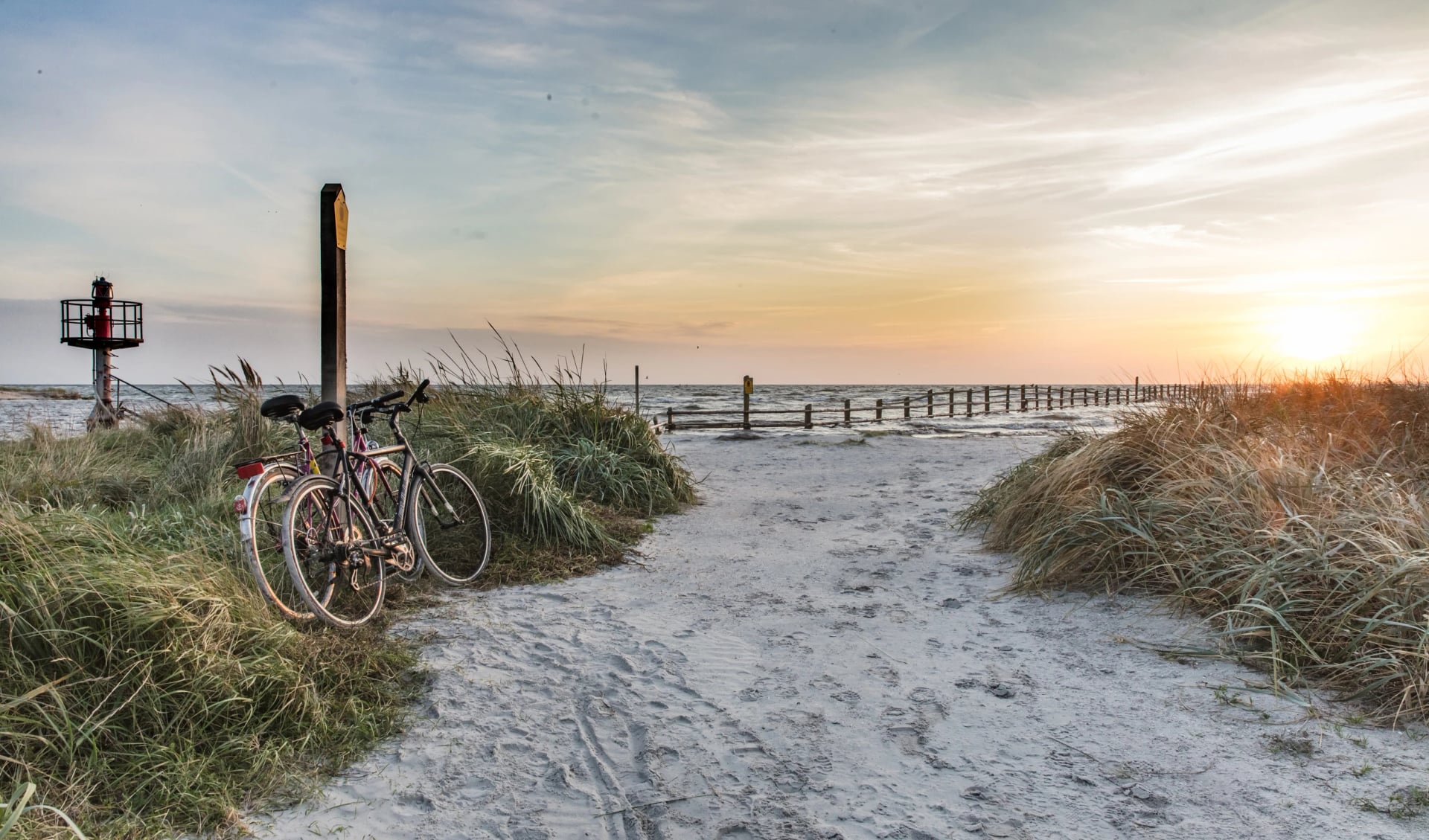
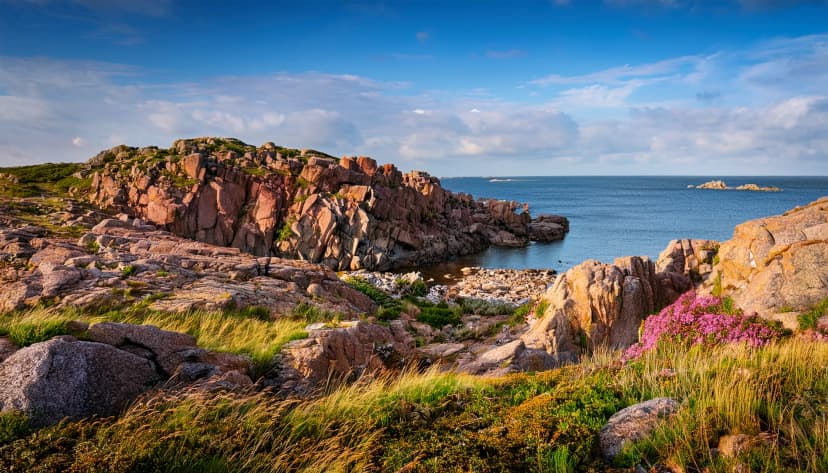
The coast for beaches and sea air. The Kattegattleden runs 390 km from Helsingborg to Gothenburg past long sandy bays, two headlands and a string of fishing harbours, with a beach town at the end of every stage. Sweden's first national route was named Cycle Route of the Year in Europe in 2018, and the wind decides how each day feels. Expect shrimp sandwiches on the harbour, castles at Halmstad and Varberg, and an evening swim almost every day. Our stage-by-stage Kattegattleden guide has the distances, direction and where to sleep.
It is the route we suggest for a first Swedish cycling holiday, for families and for anyone who wants to swim every afternoon:
2. Skåne's South Coast
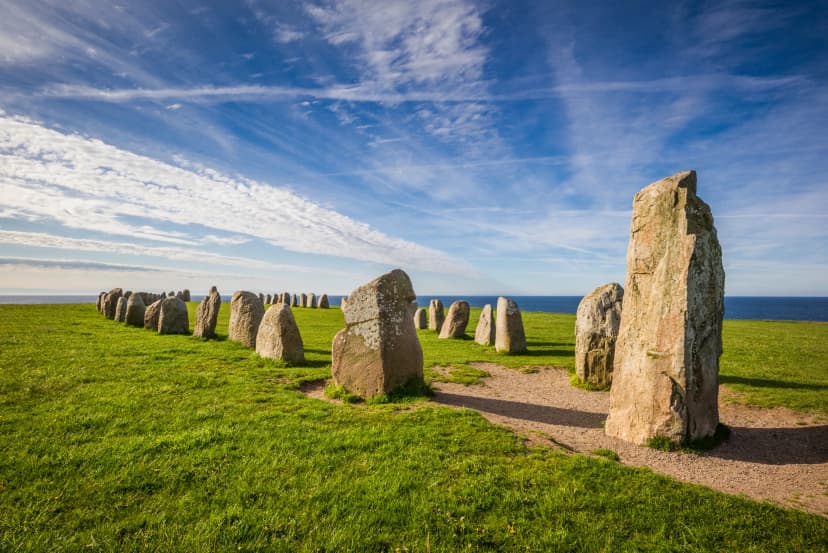
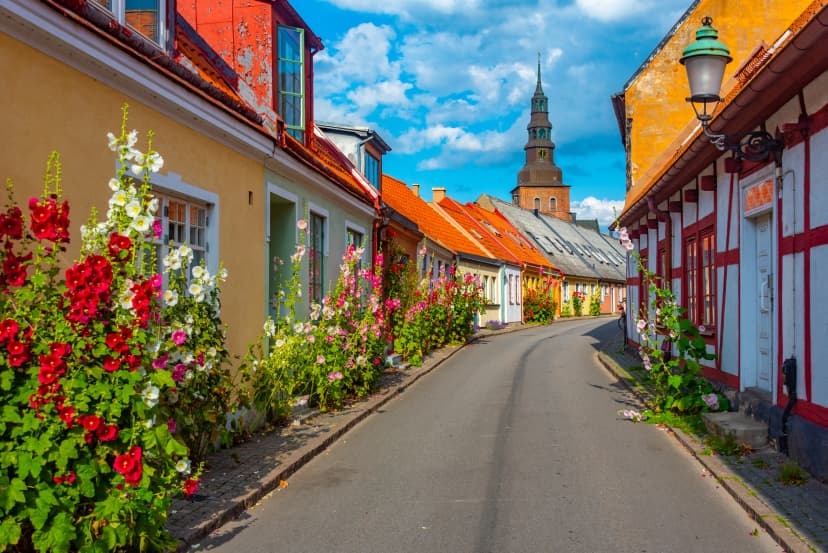
Flat farmland, beach huts and standing stones. Skåne is the part of Sweden that looks like Denmark: open fields, half-timbered towns and beaches all the way round. The Sydkustleden circles it for 260 km from Simrishamn to Helsingborg, two thirds of it on separate cycle path, past Ales Stenar, 59 boulders raised in the shape of a ship on the cliffs at Kåseberga, the cobbled lanes of Ystad, Smygehuk, the southernmost point of Sweden, and the beach huts of Skanör and Falsterbo. It is the easiest of our Swedish routes, rated 1 on our five-step fitness scale, with Malmö's cafés near the end.
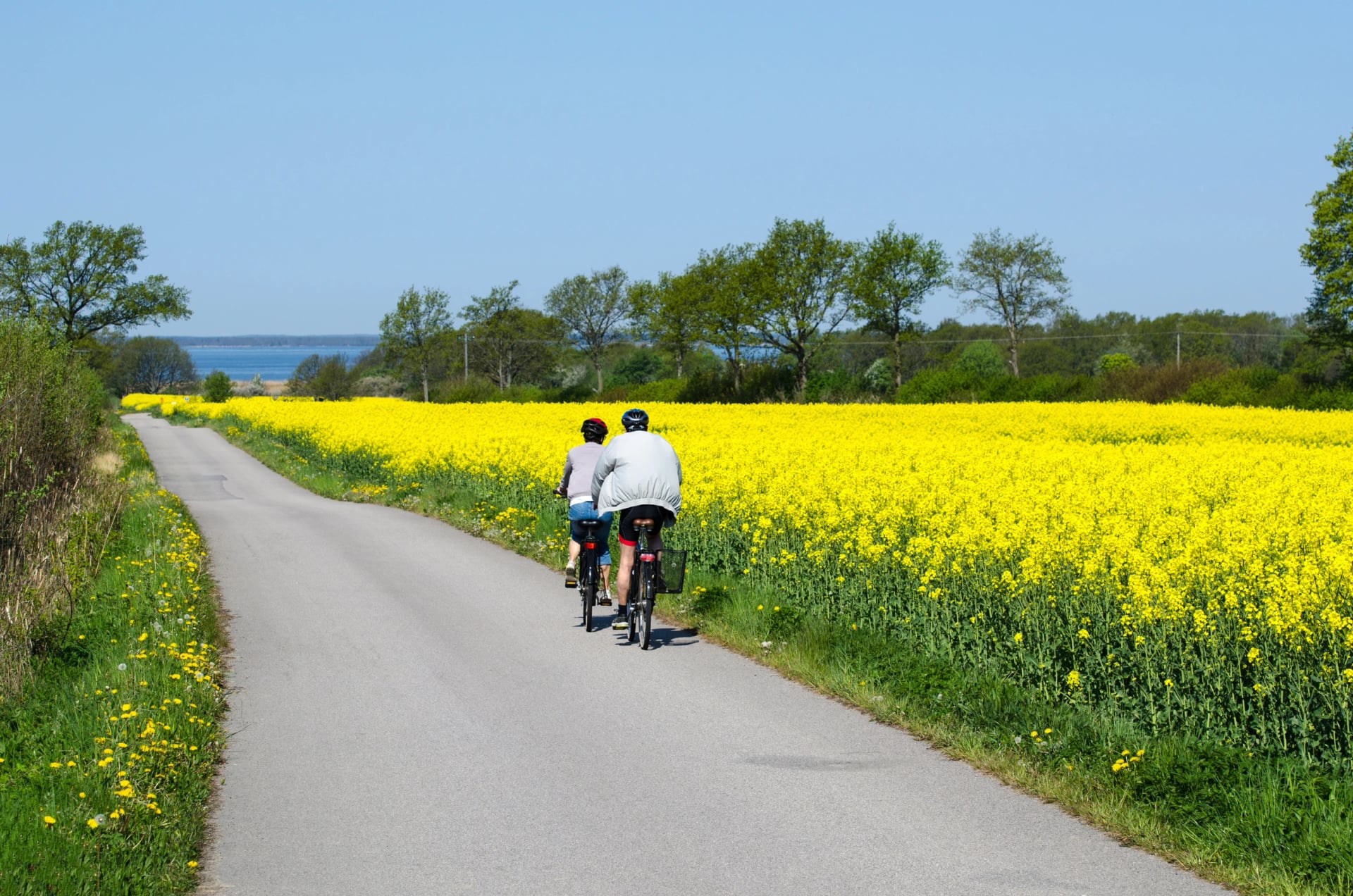
If you want short days and a town worth exploring every evening, take our south-coast week:
3. Småland and Blekinge
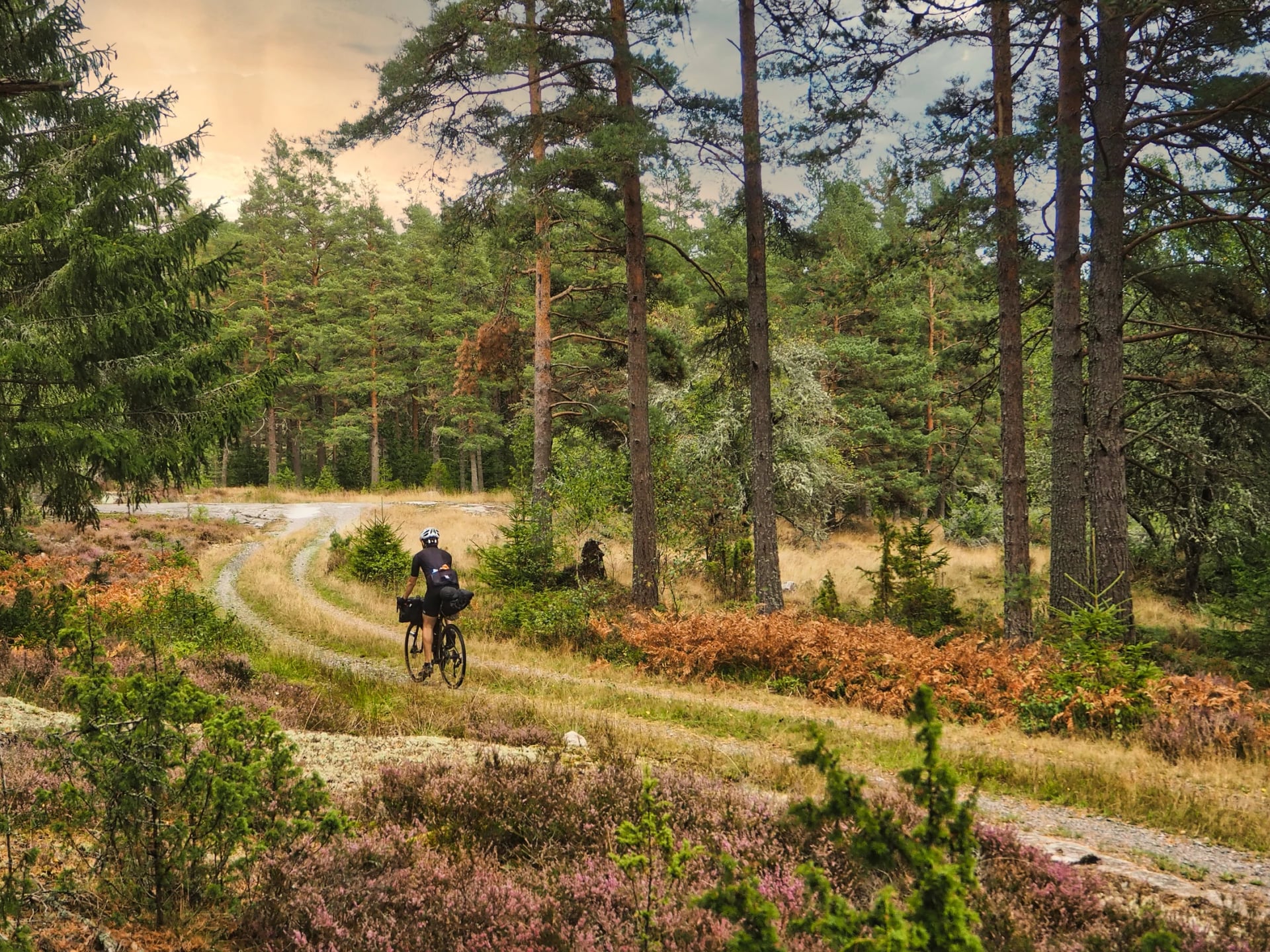
Forest, lakes and the quietest roads. The Sydostleden is the odd one out: it starts in a forest at Växjö and ends on a beach. In between come Lake Åsnen, a national park since 2018, red farmhouses on small roads where the traffic is a tractor, the salmon river at Mörrum and the Blekinge coast, where Karlshamn has been a harbour town since the 17th century. Then the hills and orchards of Österlen, the corner of Sweden that painters and cooks moved to. This is the Sweden of children's books.
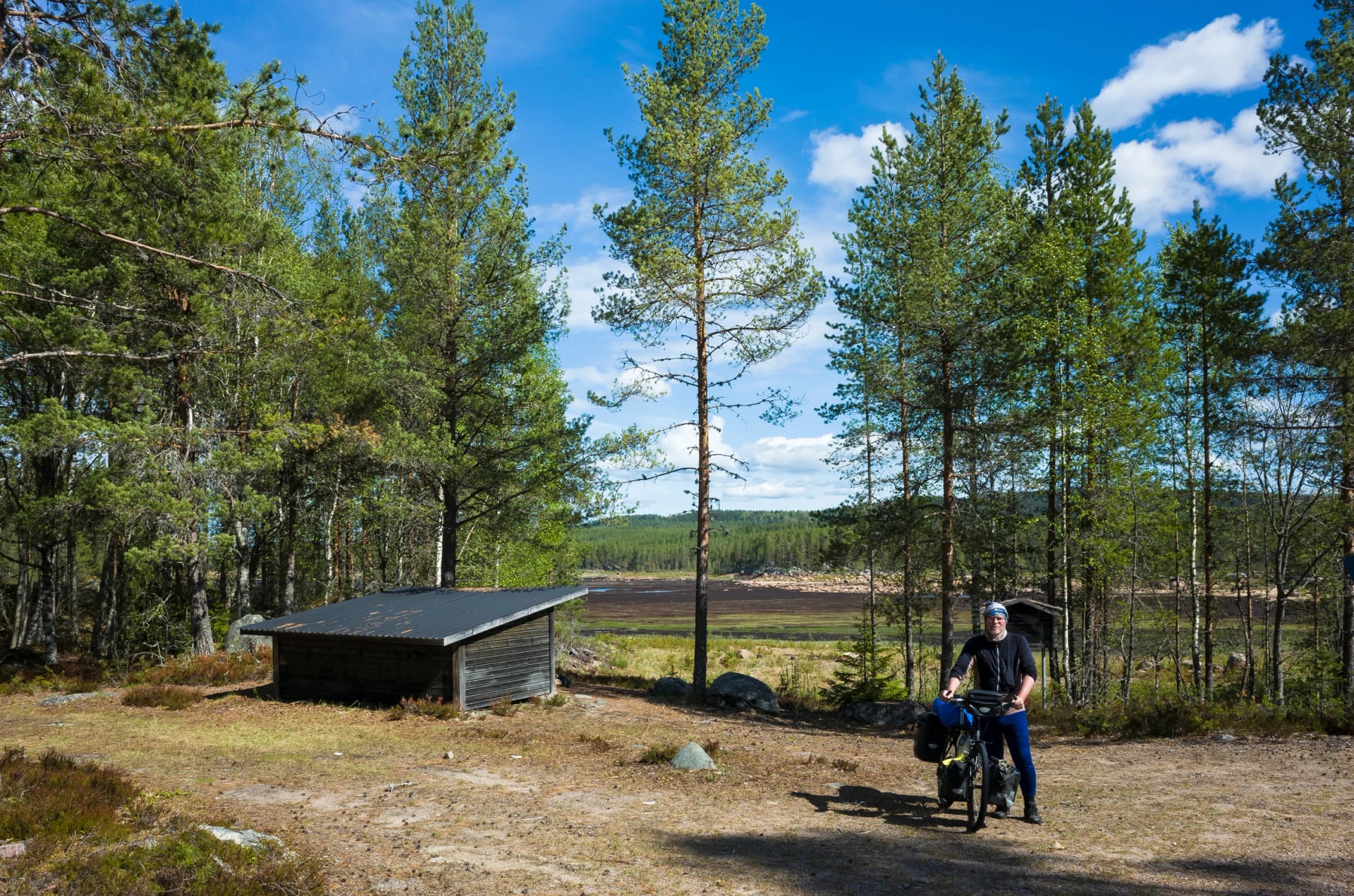
Riders who prefer pine forest and lake swims to beach towns choose our south-east tour:
4. The Göta Canal
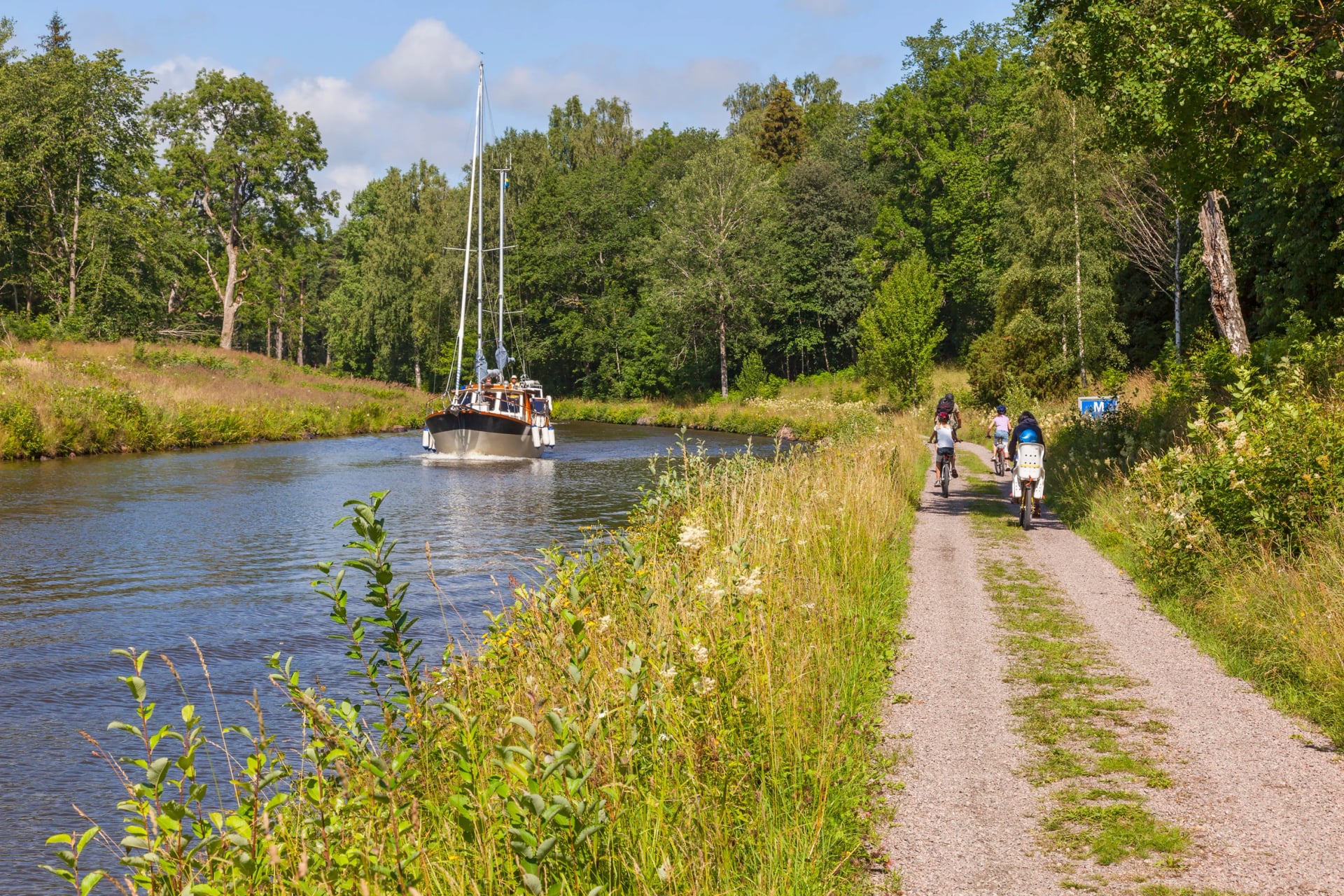
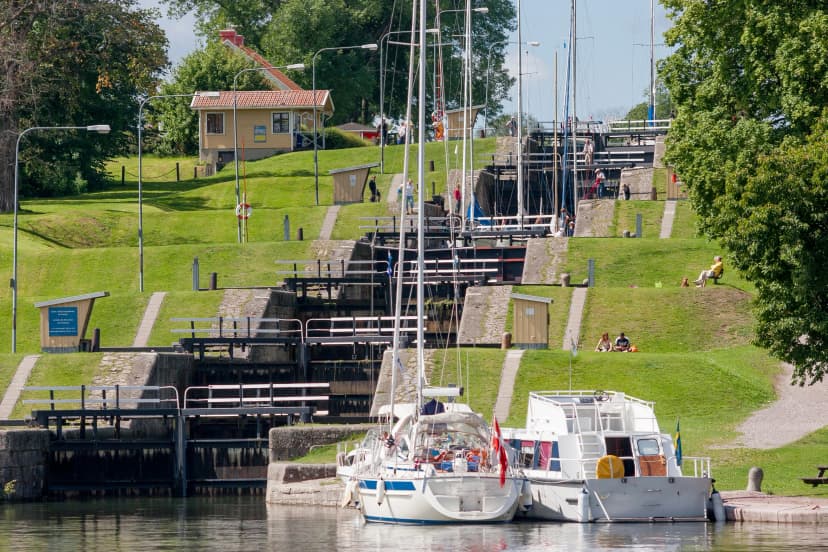
Locks, boats and canal towns. Some 58,000 soldiers dug the Göta Canal between 1810 and 1832, and it still climbs across the country through 58 locks over 190 km. The cycle route beside it is 220 km long, 87 km of it on the car-free towpath, from the oldest lock in Sweden at Forsvik to the staircase of seven at Berg, where boats rise like a lift. In 2025 it took the same European title as the Kattegattleden.
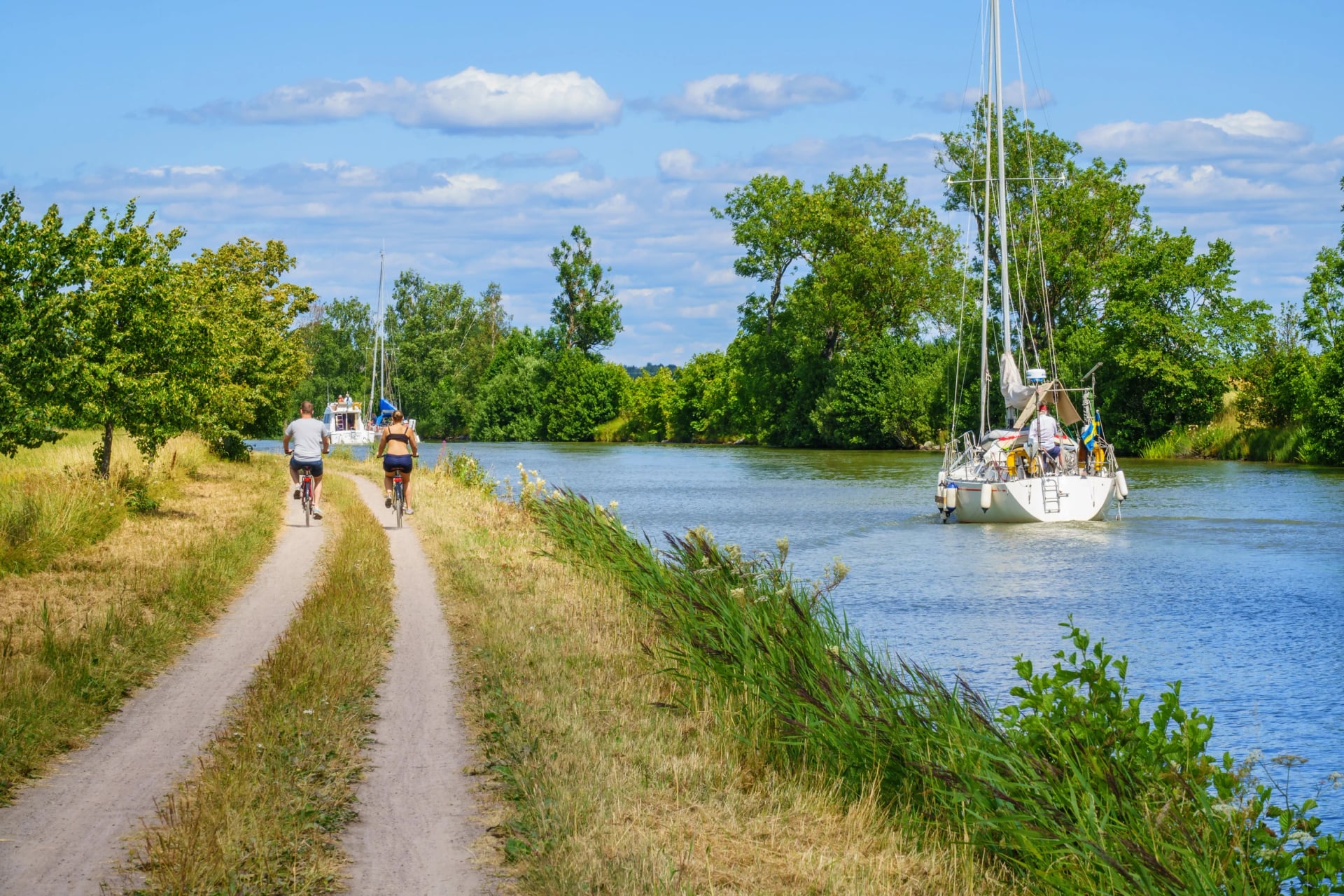
Our cycling guides recommend riding round the north end of Lake Vättern by Askersund rather than waiting for the bike boat, which is what our own tour does:
5. Lake Vänern
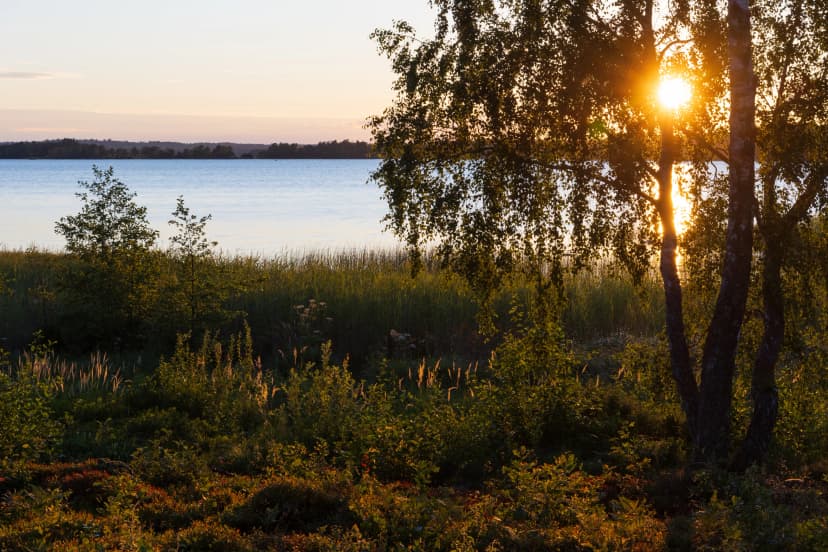
An inland sea with few people. Vänern is Sweden's largest lake and Europe's third largest, so big it has its own weather. The Vänerleden is a 640 km signed loop round it, opened in 2022, and the quietest of the national routes: forest roads, small harbours, the plateau mountains of Kinnekulle, Halleberg and Hunneberg, and Läckö Castle on its island. Few foreign cyclists have found it yet, which is part of its charm.
Most riders pick one shore for a week, and an e-bike suits its longer stages. Ours follows the east shore from Karlstad to Vänersborg:
6. Stockholm and the Baltic islands
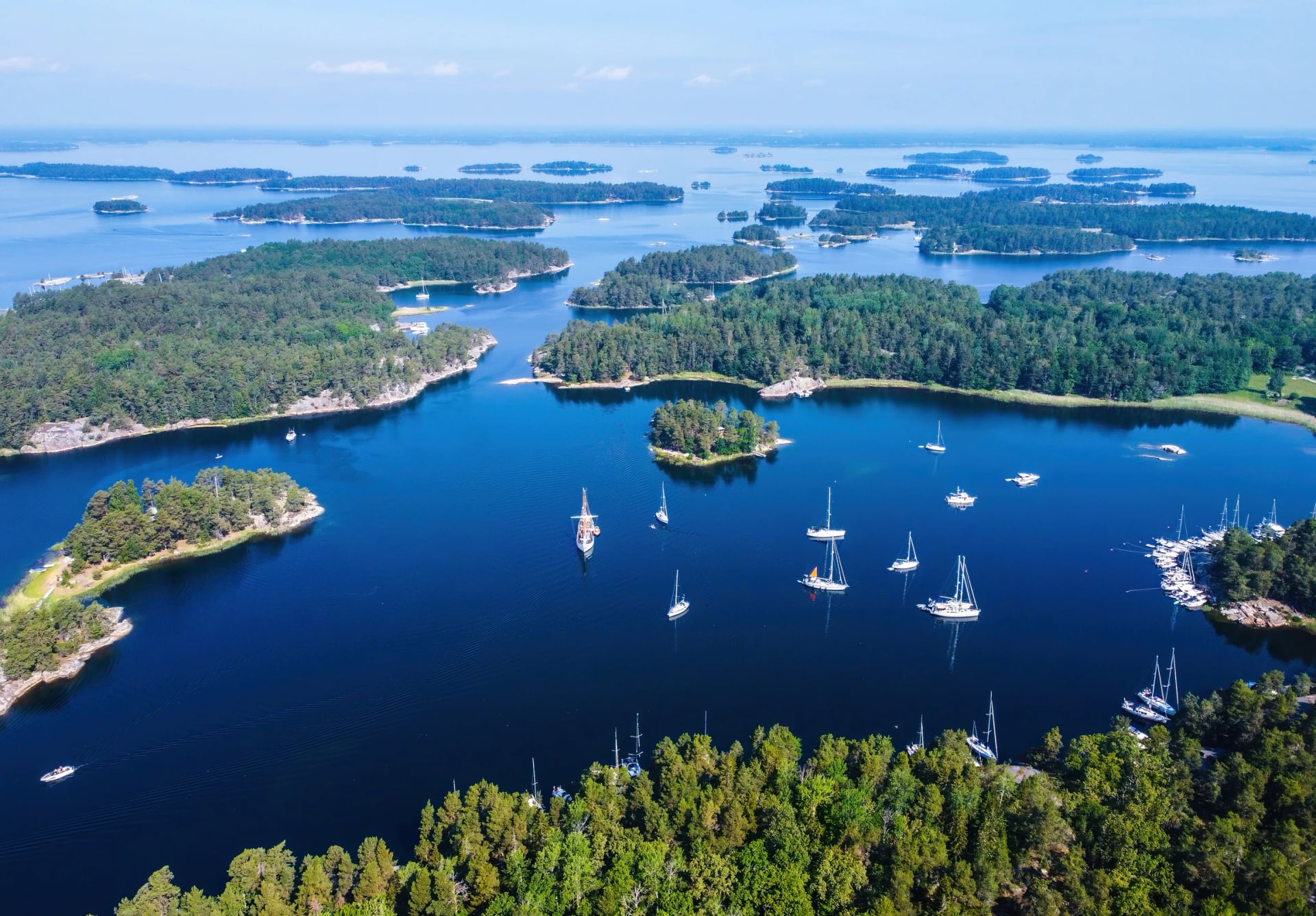
The Stockholm archipelago is the other famous cycling area: about 30,000 islands, skerries and rocks stretching some 80 km out from the city, where day rides on Vaxholm, Utö and Ljusterö mix with boat hops. Gotland and Öland, the two big Baltic islands, have quiet roads and long summer evenings, and Öland's own signed network runs to over 400 km of short loops. They make good add-ons to a city break, but they have no signed long-distance route with hotels and luggage transfer the way the national routes do.
Which route to pick?
Pick by the kind of day you want, not by distance: every route here is flat enough for a first cycling holiday.
Sea and beaches every afternoon: the Kattegattleden on the west coast.
Towns, castles and the far south: the Sydkustleden, the flattest of them all.
Forest, lakes and quiet roads: the Sydostleden through Småland.
Locks, boats and canal towns: the Göta Canal, the one for children who like watching boats.
A big lake and almost nobody: a shore of Lake Vänern, best on an e-bike.
Strong riders join two routes back to back; the Kattegattleden and the Sydkustleden meet in Helsingborg. Torn between two? Tell us your dates and how far you like to ride, and we'll suggest the one that fits.
Places to see in Sweden
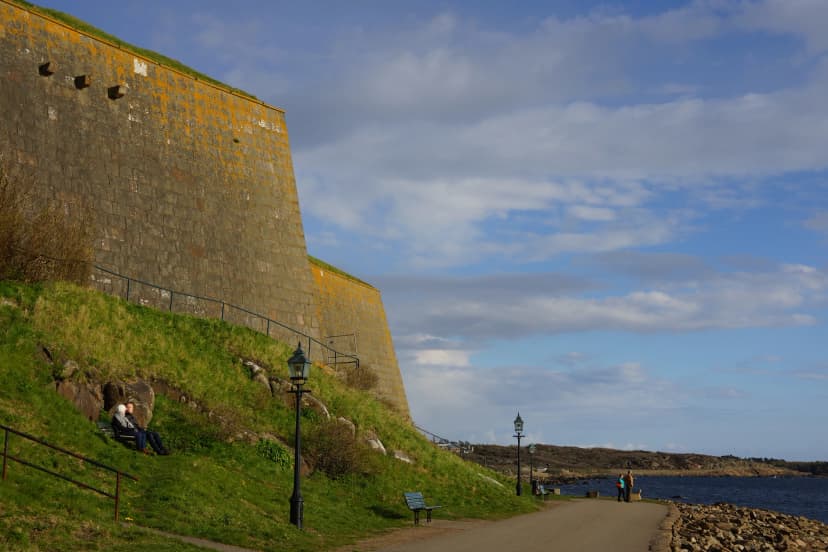
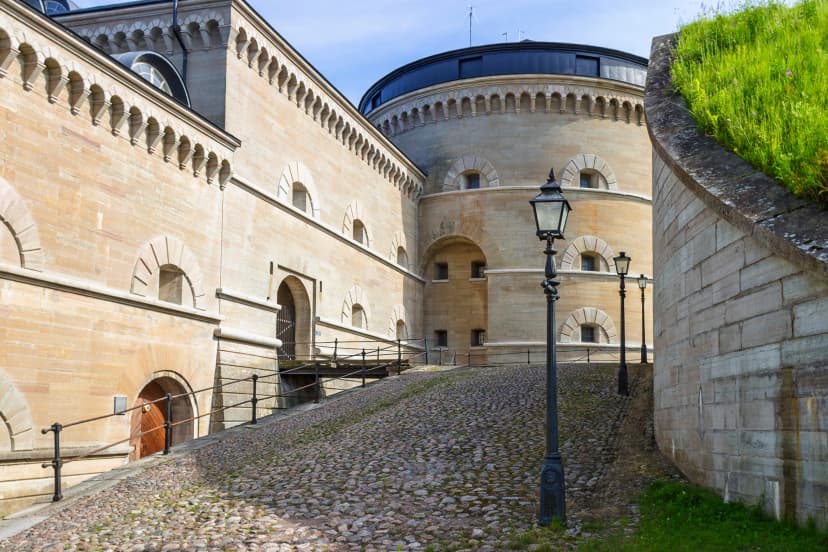
Sweden's best sights from the saddle are rarely in its cities. They are a stone ship on a clifftop, a staircase of locks, a fortress built to hold the government in wartime, a flat-topped mountain above a lake. Most sit right on our routes or a short detour off them, and each one is a reason to stop the bike for an hour.
Our cycling experts picked a favourite or two from each region:
How many days?
Plan on a week for one route. At 40 to 60 km a day that leaves time for a long lunch, a swim and a look round each town, and it covers the heart of any route in this guide. The route organisations plan their stages for 30 to 70 km a day: thirty to forty suits families and anyone new to touring, fifty to sixty is a comfortable holiday day, and seventy is a full day in the saddle. Because the routes are flat, distance and wind set the effort, and a headwind on an open coast can turn 50 km into hard work. That is the case for an e-bike, which more and more of our riders choose.
Then add a city. Most riders fly into Copenhagen or Gothenburg, and both deserve a day of their own: Gothenburg for the wooden houses of Haga and its fish market hall, Copenhagen for its harbour and its own cycle lanes. Ask us and we'll add the nights to your booking.
A day on a self-guided tour
Self-guided means no group and no guide setting the pace. You ride on your own dates and stop where you like; the planning, the hotels and the luggage are done before you arrive. Here is how a typical day goes.
Morning: breakfast and bags
Swedish hotel breakfasts are a meal to ride on: crispbread, cheese, pickled herring, eggs, filmjölk with muesli and plenty of coffee. Leave your bag at reception and it travels ahead to tonight's hotel. Your bike, if you hire one from us, was waiting at the first hotel, with a lock, a pannier and a repair kit.
On the road: signs, app and fika
Open the app, and the day's route and its sights are on your phone, with the red route signs as a back-up. Most riders stop twice: a fika mid-morning, and lunch at a harbour café or a picnic table by the water. A puncture or a wrong turn is one phone call to us.
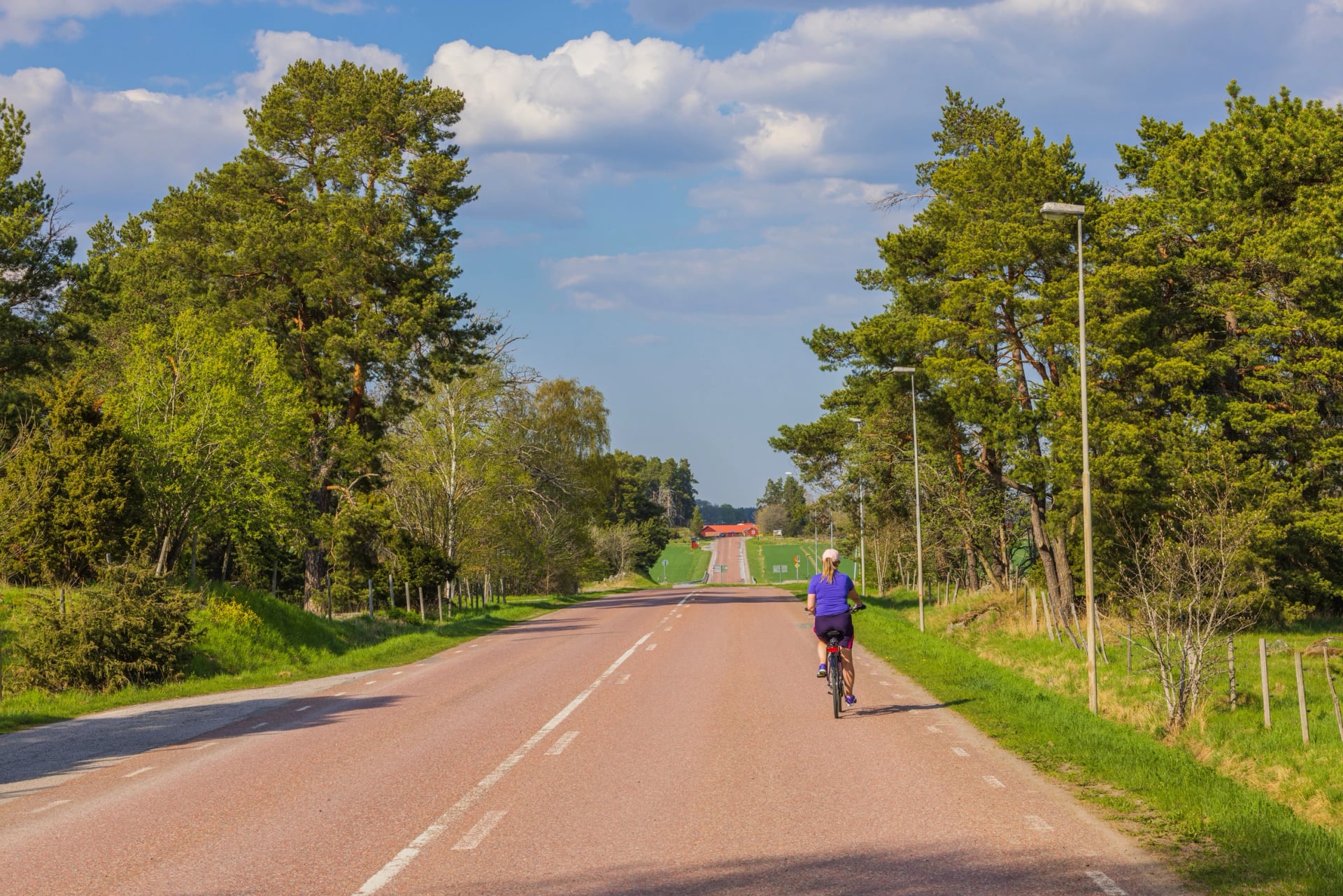
Evening: swim, dinner, light
Arrive mid-afternoon, find your bag in the room or at reception, and go for a swim while the sun is still high. Dinner in Sweden starts early, and the light doesn't fade until long after dessert, so an evening walk along the harbour is part of the plan.
Cycling events and festivals
Sweden's cycling calendar peaks in June, when Vätternrundan sends thousands of riders round Lake Vättern. The 315 km ride starts and finishes in Motala, has run since 1966 and calls itself the world's largest recreational cycling event; the 2027 edition is on 18 and 19 June, with shorter rides of 100 and 150 km the weekend before.
In August the mountain bikers take over: Cykelvasan runs 92 km from Sälen to Mora on forest roads and boardwalks, between the start and finish of the famous Vasaloppet ski race. Its organiser calls it the Nordic region's largest mountain bike event, and the 2027 race is on 14 August.
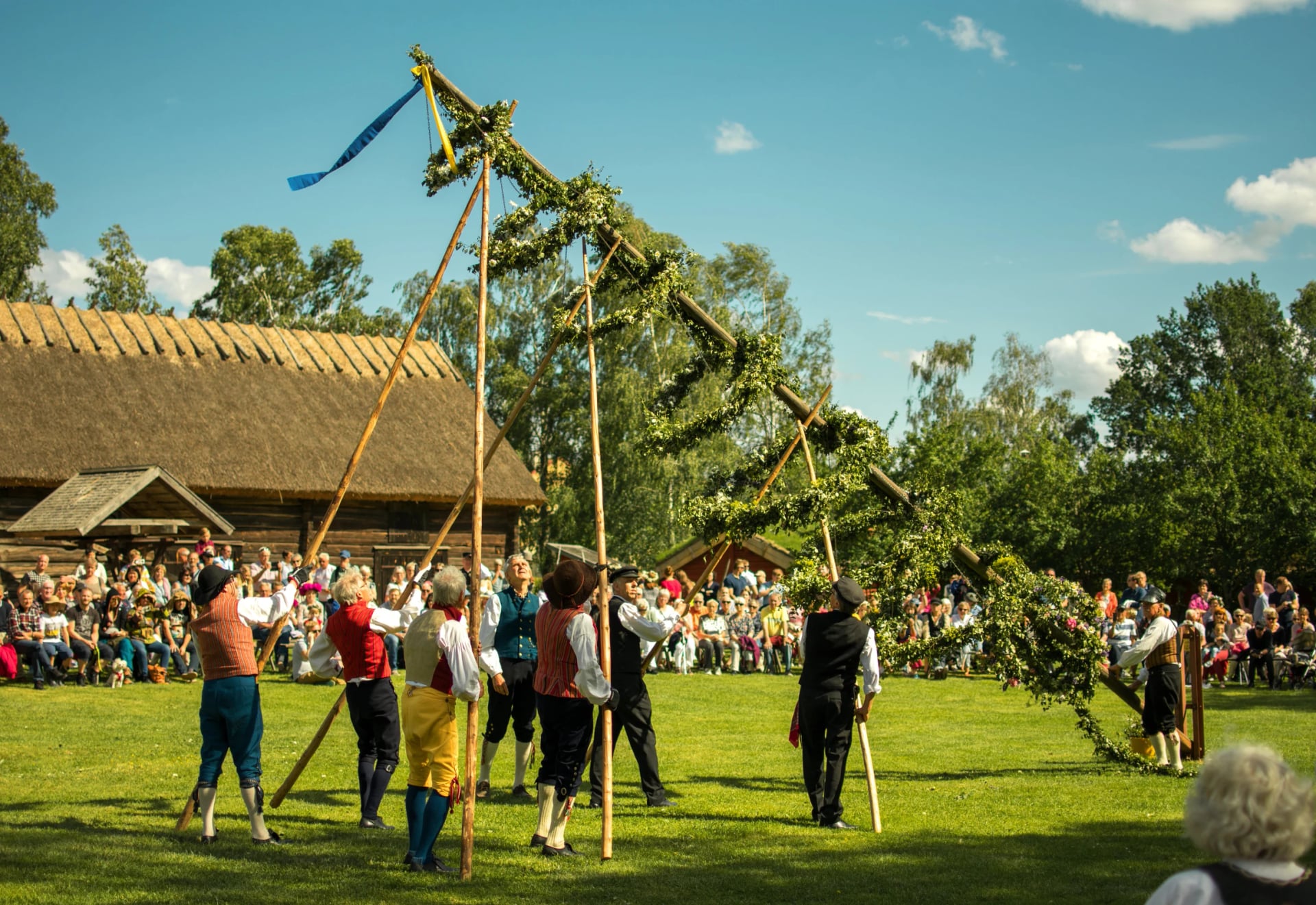
The festivals you'll meet on the road are older than any race. Midsummer is the big one. Midsummer Eve is always a Friday between 19 and 25 June, 25 June in 2027, when towns raise a maypole decked in leaves and flowers and everyone, adults included, hops round it in the "small frogs" dance.
The meal is herring, new potatoes and strawberries. Book your Midsummer nights early, and buy any wine beforehand: Systembolaget, the state alcohol shop, is closed. In August the lakeside jetties fill up with crayfish parties under paper lanterns.
What to pack
Summer in Sweden is mild and the light is long, but a coast road can be cool and wet on the same afternoon. Pack in layers.
A waterproof jacket, packable, for the showers that come and go
Padded cycling shorts and gloves
A light fleece or windproof for evenings and headwinds
Swimwear and a quick-dry towel: you'll pass a beach or a lake most days
Sunglasses and sun cream for the long June days
An eye mask if you sleep badly in the light
Insect repellent and a long-sleeved top for lake shores on summer evenings
A quick tick check after picnics in long grass
A phone mount and a power bank for the navigation app
A payment card: you will rarely need cash
A plug adapter for European two-pin sockets (types C and F) if you live outside continental Europe
You don't need to bring a lock, a pannier or a repair kit: they come with every bike we provide, and helmets and child seats are available on request.
Rules of the road
Sweden's traffic rules for cyclists are short and lightly enforced, and most of them are common sense. These are the ones that matter on a cycling holiday.
Where to ride
Use the cycle path where there is one. Riders aged 15 or over may use the road instead where the speed limit is 50 km/h or lower, with care. Ride on the right, in single file, and two abreast only where it causes no danger or obstruction. Adults may not ride on the pavement; children may, up to the end of the year they turn eight, where there is no cycle path.
Helmets, lights and the bell
Helmets are compulsory under the age of 15, a rule in force since 2005. The police can stop a child without one but not fine them; adults may ride without, though on an open coast road we recommend a helmet for everyone. Every bike needs a bell and a working brake. Lights and reflectors are required only after dark: white at the front, red at the back, which in June means almost never.
Signals and crossings
Signal with your arm in good time before you turn, and keep at least one hand on the handlebar. Sweden has two kinds of cycle crossing, and they work in opposite ways: at a cykelöverfart, marked and signed, cars must give way to you; at a simpler cykelpassage, you give way to the cars. If you're not sure which one you're at, slow down and catch the driver's eye.
Phones, alcohol and fines
Sweden's ban on holding a phone while driving covers motor vehicles, not ordinary bikes, but a handlebar mount for the navigation app is still the safer way to ride. There is no fixed alcohol limit for cyclists either; the rule is that nobody may ride who cannot do so safely, and the police can stop you. Fines are real: 1,500 kronor for running a red light, 500 for riding without lights in the dark or on the pavement.
Courtesy
Ring your bell before you pass, keep to the right on shared paths so others can overtake, and give way to pedestrians. At a café, park your bike in the rack, not against the window.
Swedish culture for cyclists
A few customs explain a lot about the country you're riding through.
Fika and lagom
Two words explain a lot. Fika is the coffee break and the chat that goes with it, a noun and a verb at once, and Swedes take it seriously enough that a mid-morning stop at a konditori, a traditional café, becomes part of any cycling day. Lagom means "just right, not too little, not too much", and it describes the Swedish pace well: nobody rushes, and nobody makes a fuss.
A few words of Swedish
You won't need Swedish: Sweden ranks eighth in the world in the EF English Proficiency Index, and almost everyone you meet will switch to English. A few words still make people smile:
Swedish | Meaning |
Hej | Hello |
Tack | Thank you |
Ursäkta | Excuse me |
En kaffe och en kanelbulle, tack | A coffee and a cinnamon bun, please |
Cykelväg | Cycle path |
Var är stationen? | Where is the station? |
You'll eat well between the stages. Five things to look out for, and where to find them:
Food and fika on the road
Five things to eat between stages, with a fact for each.
The Swedish coffee break, and a daily ritual rather than a snack. Any town on the routes has a konditori where a coffee and a kanelbulle, the cinnamon bun, is the standard order.
Fun fact: Sweden celebrates Cinnamon Bun Day on 4 October every year.
The west coast's open sandwich: a slice of bread piled with peeled shrimp, egg, mayonnaise and dill. Harbour cafés in Varberg, Halmstad and Gothenburg make it the lunch stop on the Kattegattleden.
Fun fact: the shrimp are landed on this coast, at Smögen and at Gothenburg's fish auction.
Gothenburg's fish market hall, built in 1874 and named "the fish church" for its shape. Fresh fish and seafood counters inside, restaurants around it, and the right place to celebrate the end of the Kattegattleden.
Fun fact: the name is Gothenburg dialect; in standard Swedish it would be Fiskkyrkan.
The crayfish party of August, eaten outdoors under paper lanterns with dill, bread and strong cheese. If you ride in August you will see the parties on every jetty, and many hotels along the lake routes put crayfish on the menu.
Fun fact: crayfish fishing was once limited by law to a short season, which is why the party is still an August event.
Swedish hotel breakfasts are a meal to ride on: knäckebröd, cheese, pickled herring, boiled eggs, filmjölk with muesli, and endless coffee. Eat well; the next bakery may be 30 km away on the lake routes.
Fun fact: filmjölk is soured milk, made for centuries as a way to keep milk in summer.
Travel and logistics
Entry and passports
Sweden is in the EU and the Schengen area. EU and EEA citizens need only a passport or national ID card. Visitors from outside the EU are registered by the EU's Entry/Exit System at their first Schengen border, with fingerprints and a photo, which has replaced passport stamps since April 2026. ETIAS, the online travel authorisation for visa-free visitors, is planned but not yet in force, so check before you travel. Sweden also runs checks on arrivals from Denmark, so carry your passport on the train.
Flying in
Two airports cover every route in this guide. Copenhagen Airport is the gateway to the south, because Öresundståg trains leave from the airport's own station straight into Sweden. Gothenburg serves the canal and the lakes, and its Landvetter airport has coaches to the central station in about 30 minutes. Stockholm Arlanda works for the canal and Lake Vänern when its flights are better. Compare all three on Skyscanner, and think about an open-jaw ticket, in to one airport and home from another, because every route here ends somewhere other than where it starts. Check your airline's rules and book bike carriage before you fly if you bring your own bike.
Our route | Fly into | Then |
Kattegattleden | Copenhagen | Train to Helsingborg, about 1 h 10, direct |
Sydkustleden | Copenhagen | Train to Simrishamn, about 2 h, one change |
Sydostleden | Copenhagen | Train to Växjö, about 2 h 20, direct |
Göta Canal | Gothenburg or Stockholm | Train to Töreboda, about 2 h |
Vänerleden | Gothenburg or Stockholm | Train to Karlstad, up to 3 h |
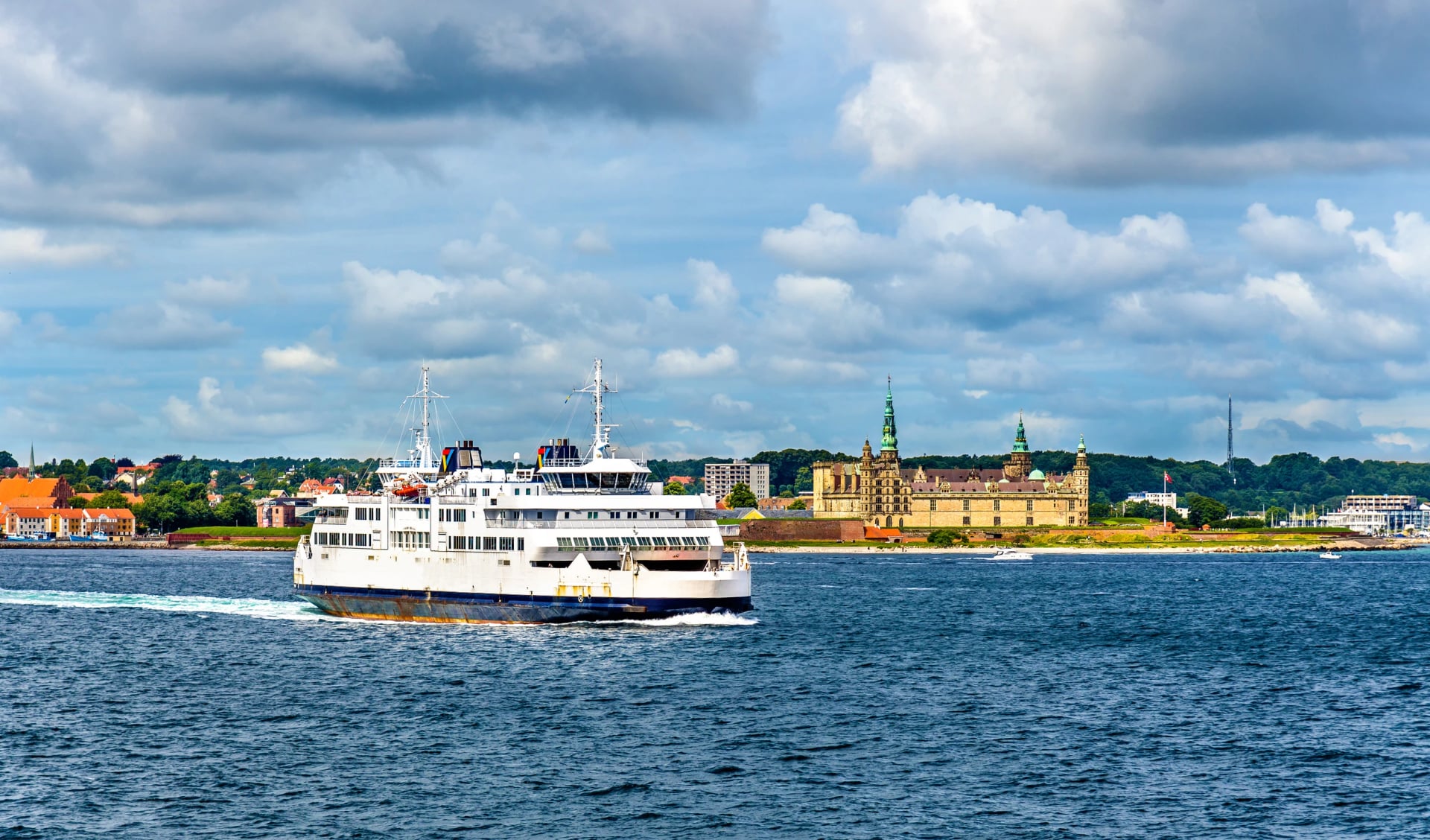
One fact changes plans: the Öresund Bridge from Copenhagen carries a motorway and a railway but no cycle lane, so you cannot cycle across to Sweden. Take the train, or the 20-minute ferry from Helsingør to Helsingborg.
Trains and tickets
Buy train tickets before you board, because the Öresundståg trains from Copenhagen sell none on the train. Öresundståg's website and app sell tickets for the airport train and for public transport elsewhere in Sweden too. Trains from Copenhagen stop at Hyllie, the first station in Sweden, for the ID check. Regional trains in the south take bikes, but SJ's long-distance trains don't unless the bike is packed in a bag, one more reason to let us deliver yours.
Or let us drive you
We arrange private transfers for any group size, from two people to a cycling club, from the airport or station to your first hotel and from your last hotel back. It is the easy option for Simrishamn and Töreboda, where the train needs a change, and for anyone landing late in the evening. Ask for one when you book.
Money and tipping
Sweden is close to cashless. Only 5 per cent of Swedes paid cash for their last purchase in a shop in 2025, according to the Riksbank, and many cafés take cards or phones only. The currency is the krona (SEK); euros are generally not accepted, and Swish, the phone payment Swedes use, needs a Swedish bank account, so a card that works abroad is all you need. Tipping is welcome but not expected: round up, or add about 10 per cent for good service at dinner. Wine and spirits to take away are sold only at Systembolaget, which is closed on Sundays and holidays.
Emergencies and health
Call 112 for an ambulance, fire or urgent police help; the operators speak Swedish and English. For health advice that isn't an emergency, call 1177, and for police matters that can wait, 114 14. EU visitors with a European Health Insurance Card pay the same fees as Swedes.
Phone and internet
EU and EEA phone plans roam at home prices in Sweden. Download the day's route in the app before you set off, in case a forest valley drops your signal.
Plan your Sweden cycling holiday with us
You have the routes, the season and the rules; the rest is choosing the coast, the canal or the lake. With us, each tour comes ready to ride:
Hand-picked hotels, guesthouses and B&Bs in the stage towns, with breakfast
Luggage transfer between hotels every riding day
The route, sights and hotels in a navigation app, plus a digital guidebook
A trekking bike or e-bike delivered to your first hotel, if you want one
Private transfers for any group size, at the start and the end
Someone to call if anything goes wrong on the road
Tell us your dates and group size and we'll match you to a route and check the hotels, or book a free video call with one of our cycling experts. Still comparing? All our self-guided tours in Sweden are on one page.
Frequently Asked Questions
Plan with a cycling expert
Free advice from a team that knows these routes inside out - real people, not a bot

Hassle-Free
We handle itineraries, accommodations, and anything else you prefer not to deal with, so you can enjoy a carefree holiday.

Tried & Tested Adventures
Our cycling routes are hand-picked & tested, to ensure breathtaking landscapes, smooth roads, and maximum safety - giving you the perfect ride every day.

Unbeatable Support
Our 24/7 customer support is where we show our passion, ensuring your cycling holiday runs smoothly and your well-being is always our top priority.

Book with Confidence
We are a financially protected company, fully bonded and insured, keeping your money safe and allowing you to travel with confidence.